Focusing on valuable or protected ecosystems or environmental features, there are several notable ecological assets throughout the Gilbert catchment and the GRAP.
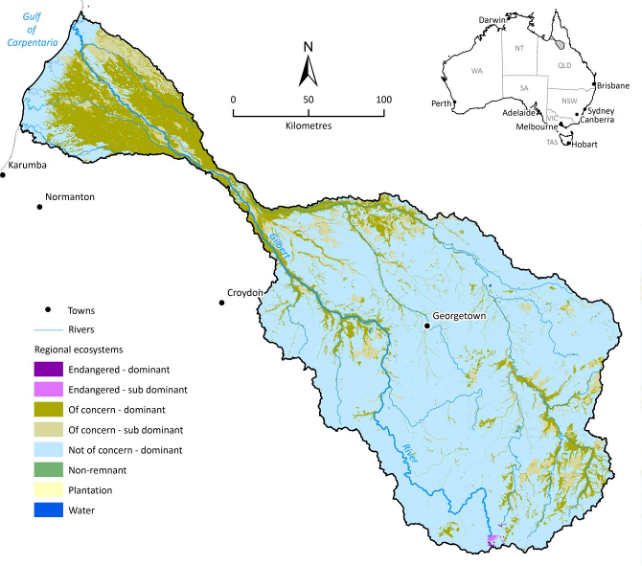
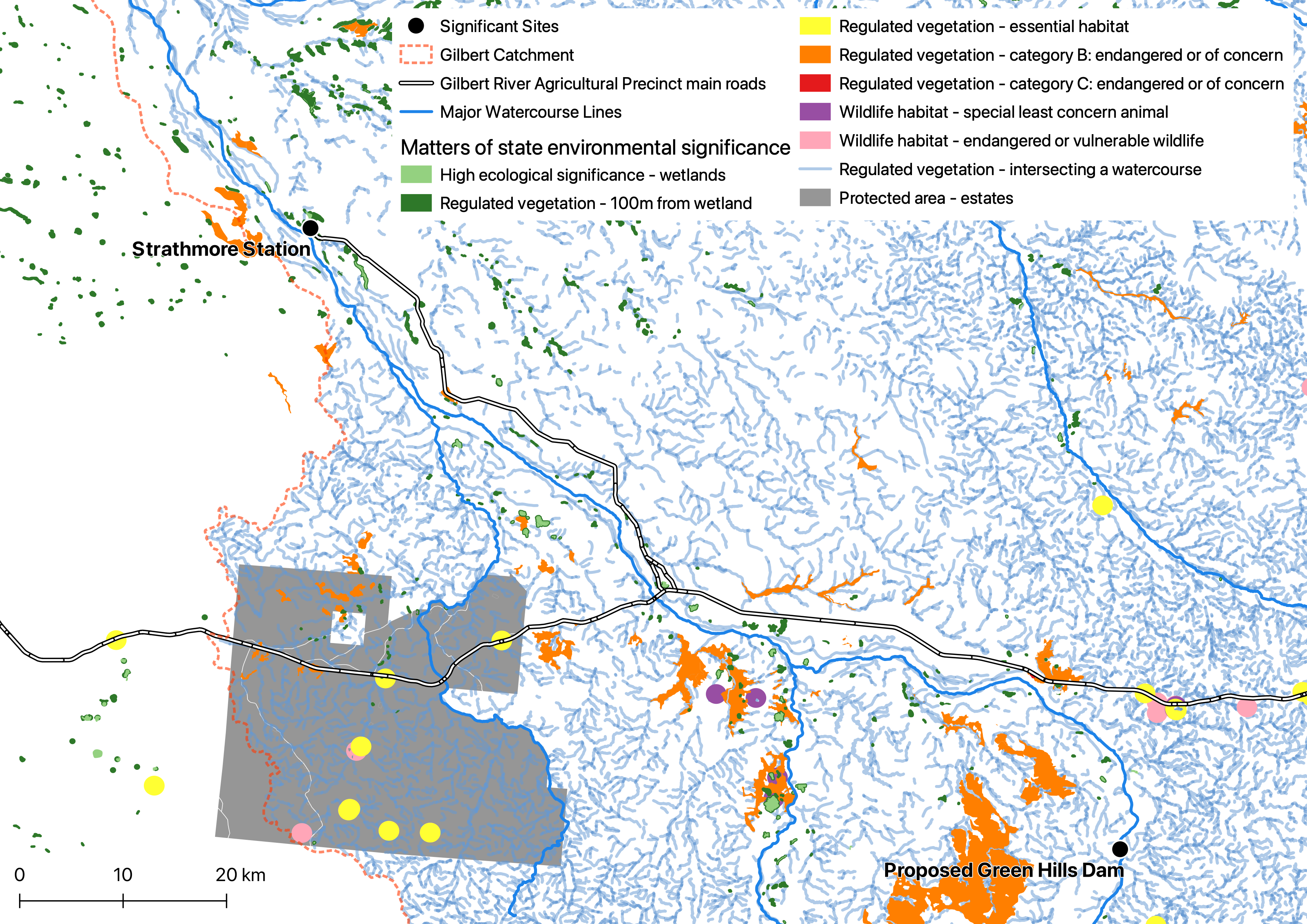
Vegetation in the Gilbert catchment spans from ‘not of concern’ to ‘endangered’ based on biodiversity codes from the Vegetation Management Act 1999. Beyond biodiversity codes there are also Matters of State Environmental Significance that relate to vegetation including areas of regulated vegetation.
There are multiple fish species whose movement would likely be impacted if instream dams were to be constructed across watercourses in the Gilbert catchment including barramundi (Lates calcarifer), freshwater sawfish (Pristis microdon) and freshwater whipray (Himantura dalyensis). Changes in flow regimes would impact freshwater turtles, frogs, crustaceans and crocodiles.
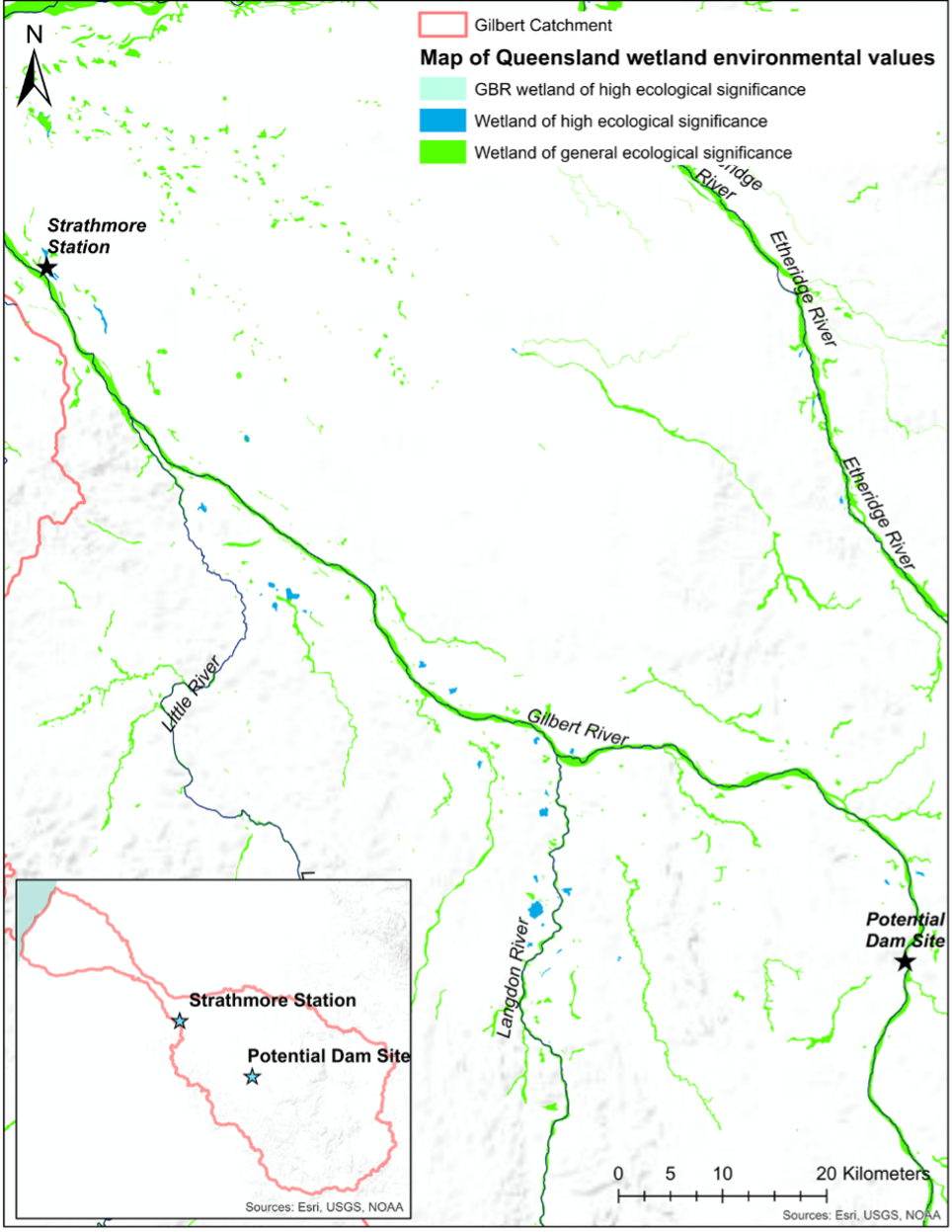
The waterholes that form in the river beds throughout the Gilbert catchment in the dry season are important refugees for many aquatic species. Pumping water from the bed sands has been suggested to impact nearby waterholes as the water levels of each are linked. Possible impacts of increased agriculture in the Gilbert catchment on waterhole ecology include the introduction of fertilisers and herbicides into the waterways.
Groundwater dependent ecosystems (GDE), even if only opportunistic users of groundwater, are present in the Gilbert catchment, mainly in the form of Tea-tree (Melaleuca spp.) forests and woodlands. The GDE Atlas is one source of maps of potential aquatic, terrestrial, and subterranean GDEs. Threats to GDE include depleting groundwater reserves, altering groundwater regimes and degrading groundwater quality.
Relatively little is known about the ecosystem in the bed sands of the Gilbert River, and other rivers in the catchment. This ecosystem exists in the saturated sediments of the river bed which is known as the hyporheic zone. The need to preserve the hyporheic zone of Gulf rivers is a consideration in water policy developed for the region. Flows in the hyporheic zone continue after surface flow ceases and this zone provide a habitat for a diverse range of aquatic fauna including microbes, macroinvertebrates, and fish. Both surface water and groundwater development may threaten functioning of the hyporheic zone.
Flows into the Gulf from catchments have a direct relationship to fishery catch with a higher number of prawn landings in above average wet seasons. This relationship is driven by nutrients in streamflow stimulating primary production which provides food for fish, prawns and crabs. Streamflow into the estuaries also promotes movement of species out of the estuaries for reproduction and increases catchability. It has been suggested that extraction during low flows would have the greatest impact on fishery catch. The rules developed for the current Gulf unallocated water release. which restrict take from the Gilbert River during low flows is intended to should preserve the link between terrestrial and marine environments, a relationship that the Gulf fisheries industries depend upon.
Ecological impacts of development
Any development of the catchment will impact the area’s ecological assets to some extent and so some form of impact assessment is required for any proposed development. The nature of the assessment depends on the scale, nature and location of the proposed development works. Some works might only require Self-assessable works while others need more detailed Development Approvals
On this website:
Data sources
- Matters of State Environmental Significance includes a wide range of regulated vegetation, including:
- Regulated vegetation - category C endangered or of concern; category B endangered or of concern
- Regulated vegetation - 100m from wetland
- Regulated vegetation - essential habitat
- Regulated vegetation - intersecting a watercourse
- High ecological significance wetlands
- Protected area - estates
- Protected area - nature refuges
- Wildlife habitat - endangered or vulnerable wildlife; special least concern animal
- Referrable wetlands
- Groundwater Dependent Ecosystems: Springs, Watercourses, aquatic, terrestrial
- Planning website